Tab Stacks on Android
This post is also available in:


Tab Stacks let you organize your tabs into various groups to keep related tabs together and to declutter your Tab Bar and Tab Switcher.
Create Tab Stacks
To create a new stack:
Option 1
- Open the Tab Switcher.
- Long-press on a tab.
- Drag it over another tab you want to group it with.
- Release the tab to create a new stack.
Option 2
- On the Tab Bar, long-press on the tab you want to create a stack with.
Alternatively, while the tab is the active tab long-press on the New Tab button on the right side of the Tab Bar.
 - Select Add tab to new stack.
If you already have some stacks open, select Add Tab to Stack > New Tab Stack.
It’ll create a stack with the active tab and a new Start Page tab.
Option 3
To create a new stack with the active tab and a link opened in a new tab from the active tab:
- Long-press on the link to open the context menu.
- Select Open in new Tab Stack.
Add tabs to a stack
To open a new tab in a stack:
Option 1
- Open the Tab Switcher.
- Tap on the stack to view the tabs in it.
- Tap on the New Tab button in the top right corner of the stack preview window.
Option 2
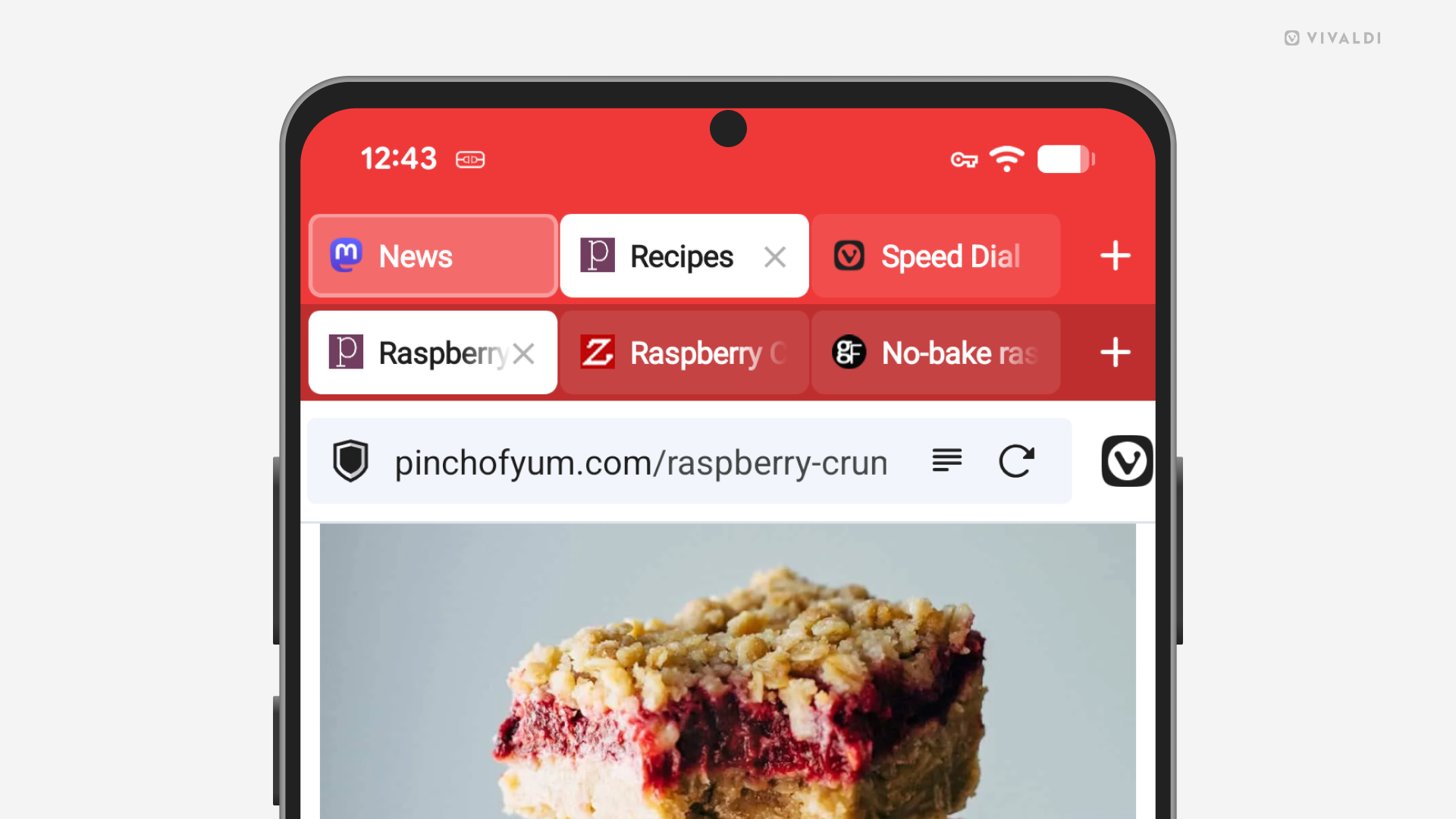
On a Tab Bar with Two-Level Tab Stack:
- Focus on a tab in the stack to see the second Tab Bar.
- Tap on the New Tab button on the right side on the second Tab Bar level.
Option 3
On a Tab Bar with Accordion Tabs, tap on the New Tab button on the right side of the toolbar.
Option 4
With the stack toolbar when the Tab Bar is hidden:
- Tap on the
 upward chevron button.
 - Tap on the New Tab button in the top right corner of the stack preview window.
To add already open tabs to a stack:
Option 1
- Open the Tab Switcher.
- Long-press on a tab.
- Drag it over an existing tab stack.
- Release the tab to add it to the stack.
Option 2
- On the Tab Bar, long-press on the tab you want to add to a stack or move to a different stack.
Alternatively, while the tab is the active tab long-press on the New Tab button on the right side of the Tab Bar. - Select Add Tab to Stack and pick a stack to add the tab to.
View and switch tabs
Tab Switcher
No matter your setup, you can always access all your tabs from the Tab Switcher.
To view stacked tabs:
- Open the Tab Switcher.
- Tap on a stack to preview all tabs in it.
- Tap on the tab you want to view.
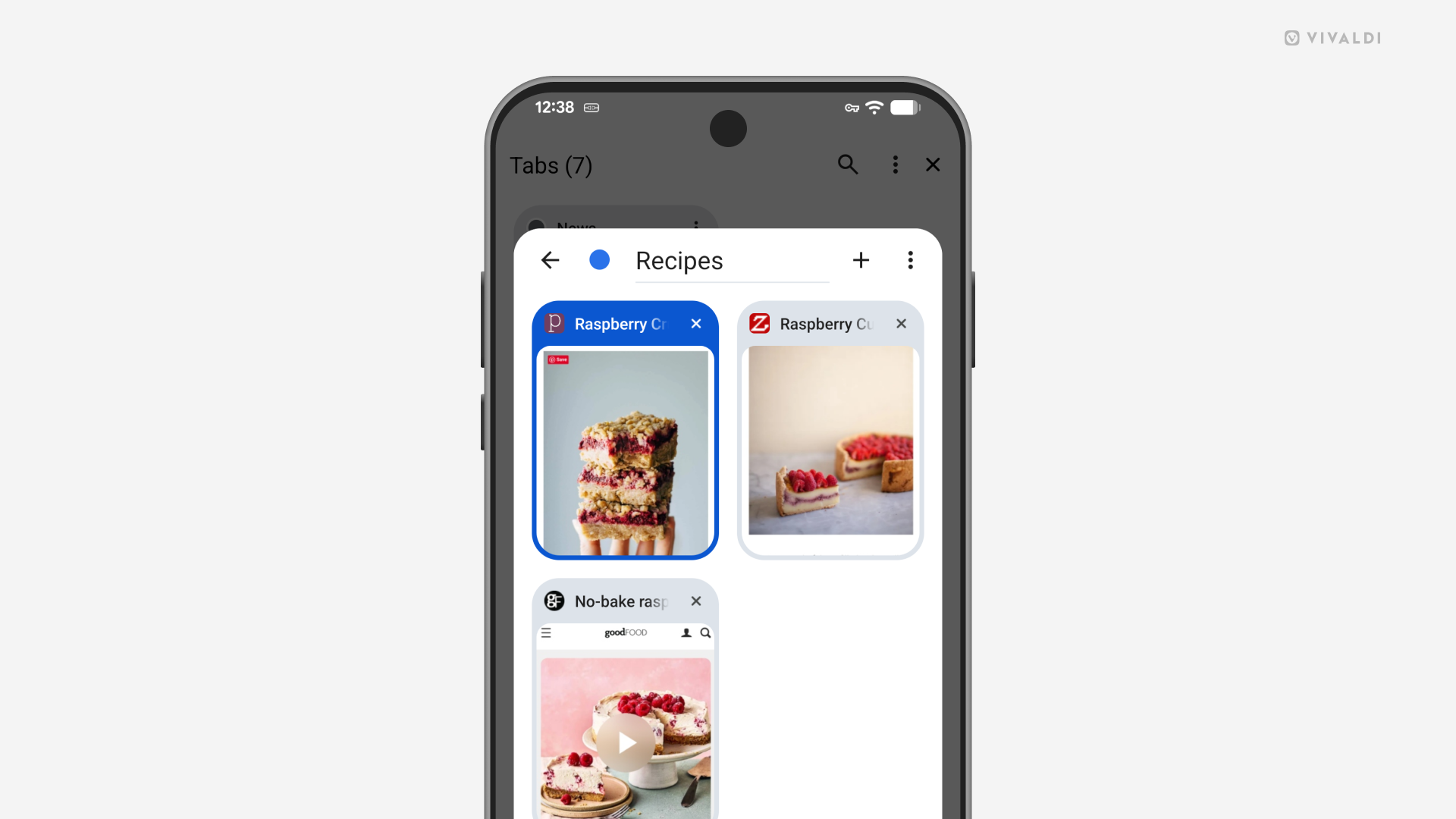
Tab Stacks pane in the Tab Switcher
To get an overview and manage your grouped tabs in a clean view separate from regular, unstacked tabs, head over to the Stacked Tabs pane.
To view all your Tab Stacks:
- Open the Tab Switcher.
- Swipe to the Stacked Tabs pane or tap on its icon on the menu bar at the bottom of the screen.
In the Tab Stacks pane, you can find and open one of the stacked tabs, edit your grouped tabs, and delete them.
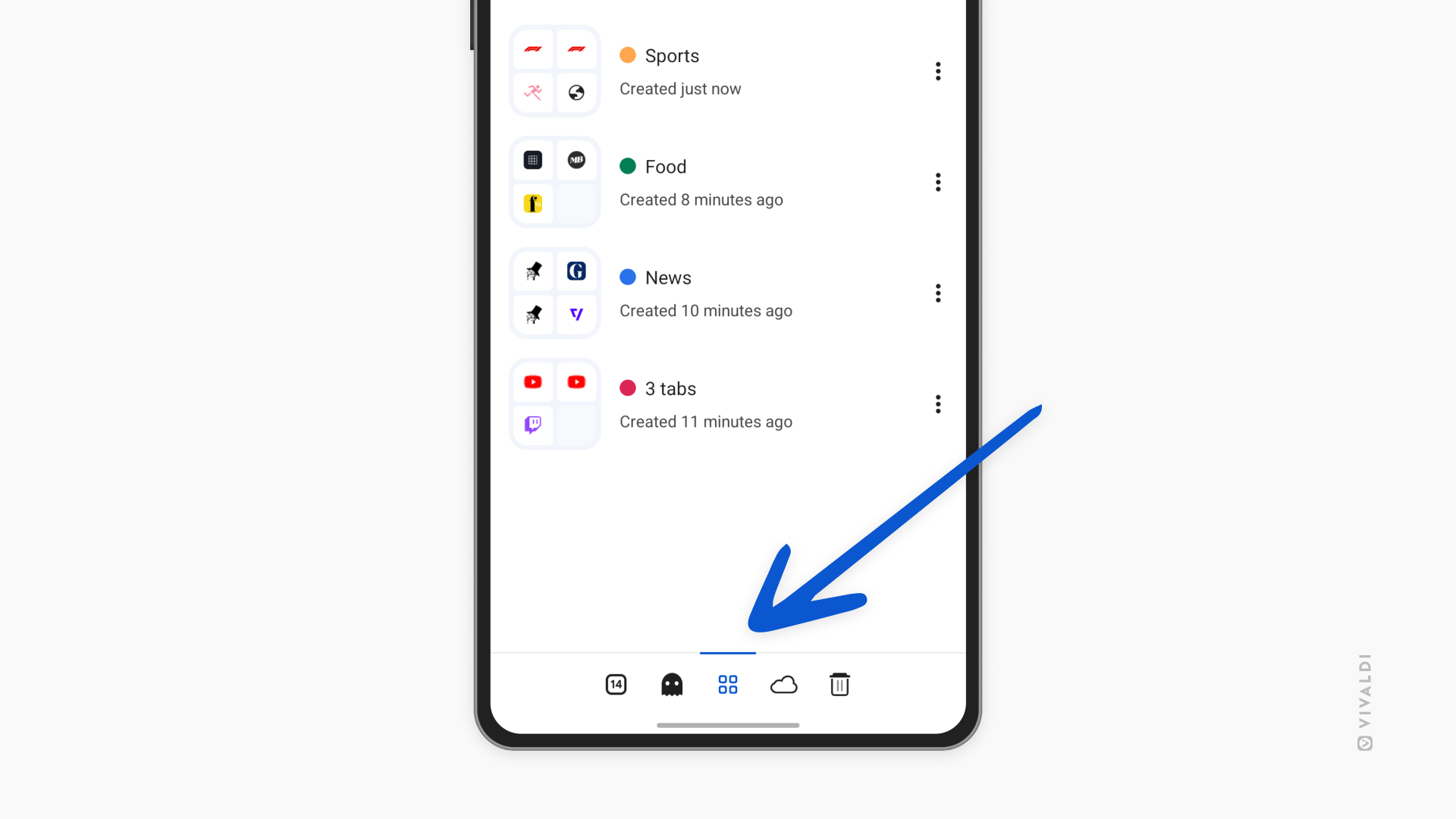
Tab Stacks on the Tab Bar
There are two ways you can display your Tab Stacks on the Tab Bar.
To choose your preferred view of Tab Stacks on the Tab Bar:
- Go to
 Vivaldi menu > Settings > Tabs > Tab Stacking.
 - Select between Accordion Tabs and Two Level.
Two-Level Tab Stacks
One of the ways is with the Two-Level Tab Stacks which displays the tabs in the stack on the second level of the Tab Bar. The second level is only displayed when one of the stacked tabs is the active tab.
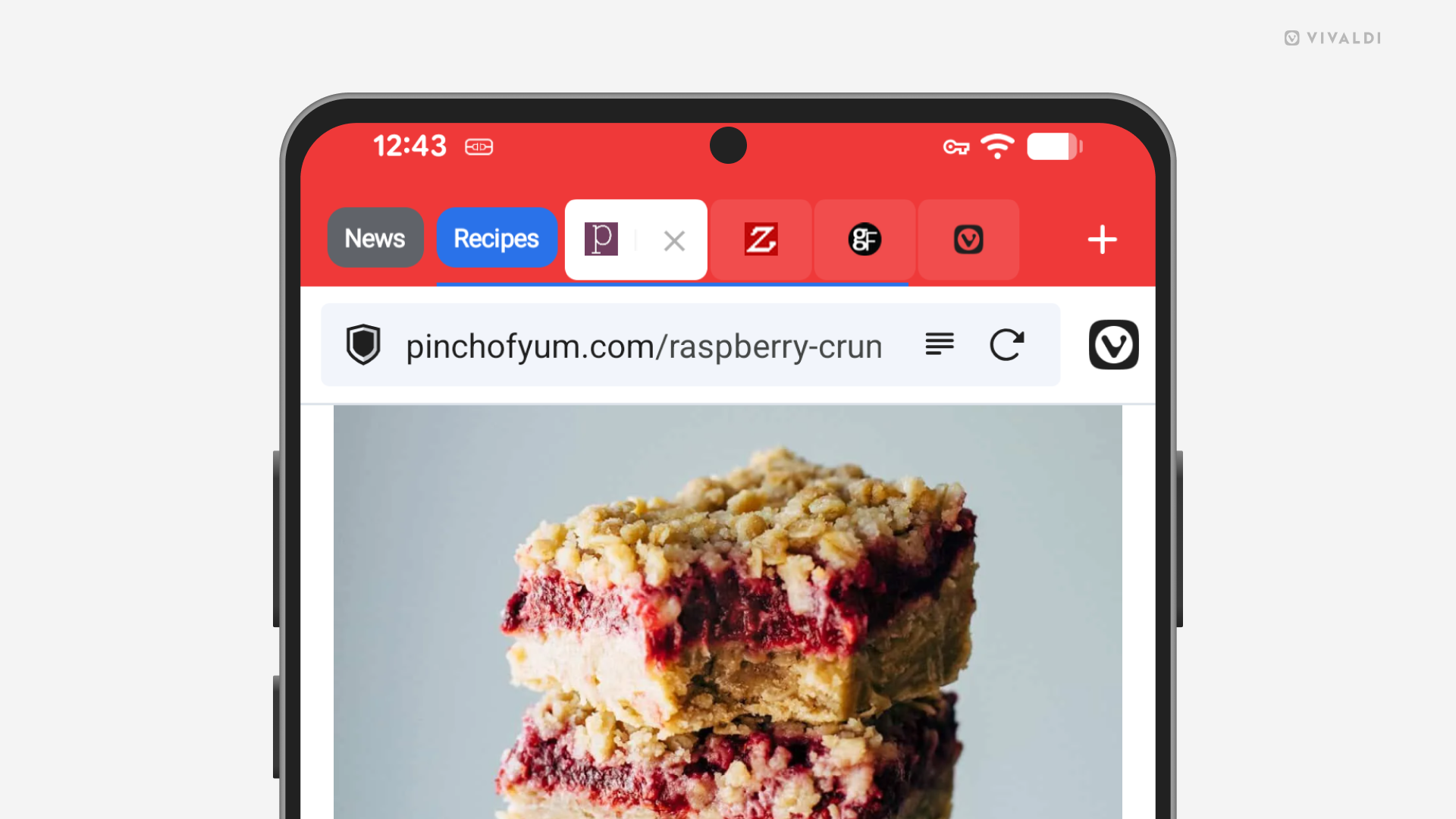
Accordion Tabs
The other option for viewing Tab Stacks on the Tab Bar is the Accordion Tabs option. This will show tab groups on the same level as regular tabs, but will expand when you’re viewing a tab in a stack, but can be collapsed with a tap on the stack’s name when viewing other tabs or tabs in other stacks.
Tab Stacks toolbar
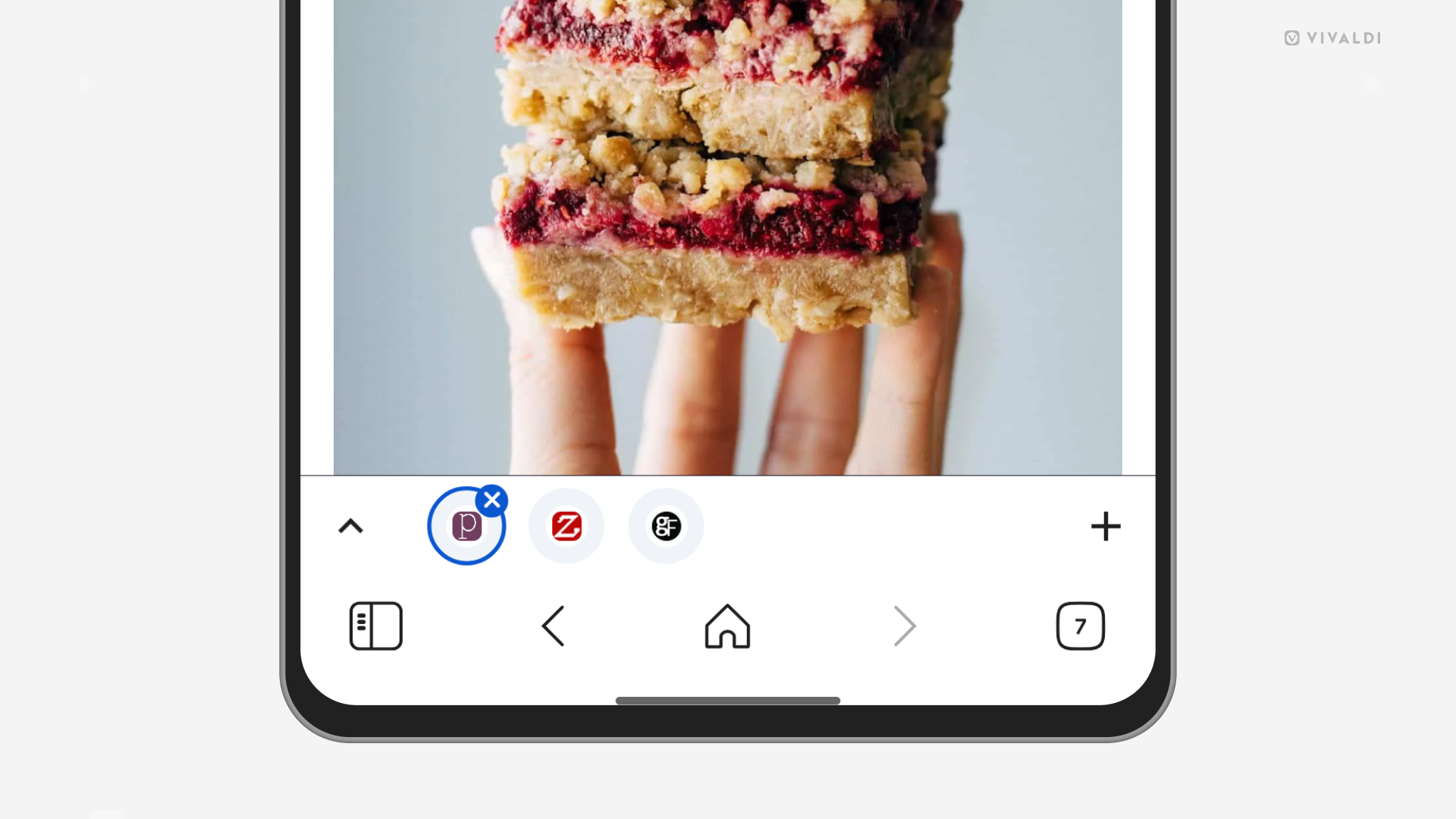
In case you have disabled the Tab Bar, a Tab Stack toolbar will appear just above the bottom toolbar, when you’re viewing one of the grouped tabs.
Tap on the page favicons on the toolbar to switch tabs. Tap on the arrow pointing up on the left side to preview tabs in the stack. To open a new tab in the stack, tap on the New Tab button on the right side of the toolbar.
Rename Tab Stacks
To give your Tab Stacks a unique name:
Option 1
- Open the Tab Switcher.
- Locate the Tab Stack you want to rename and tap on it.
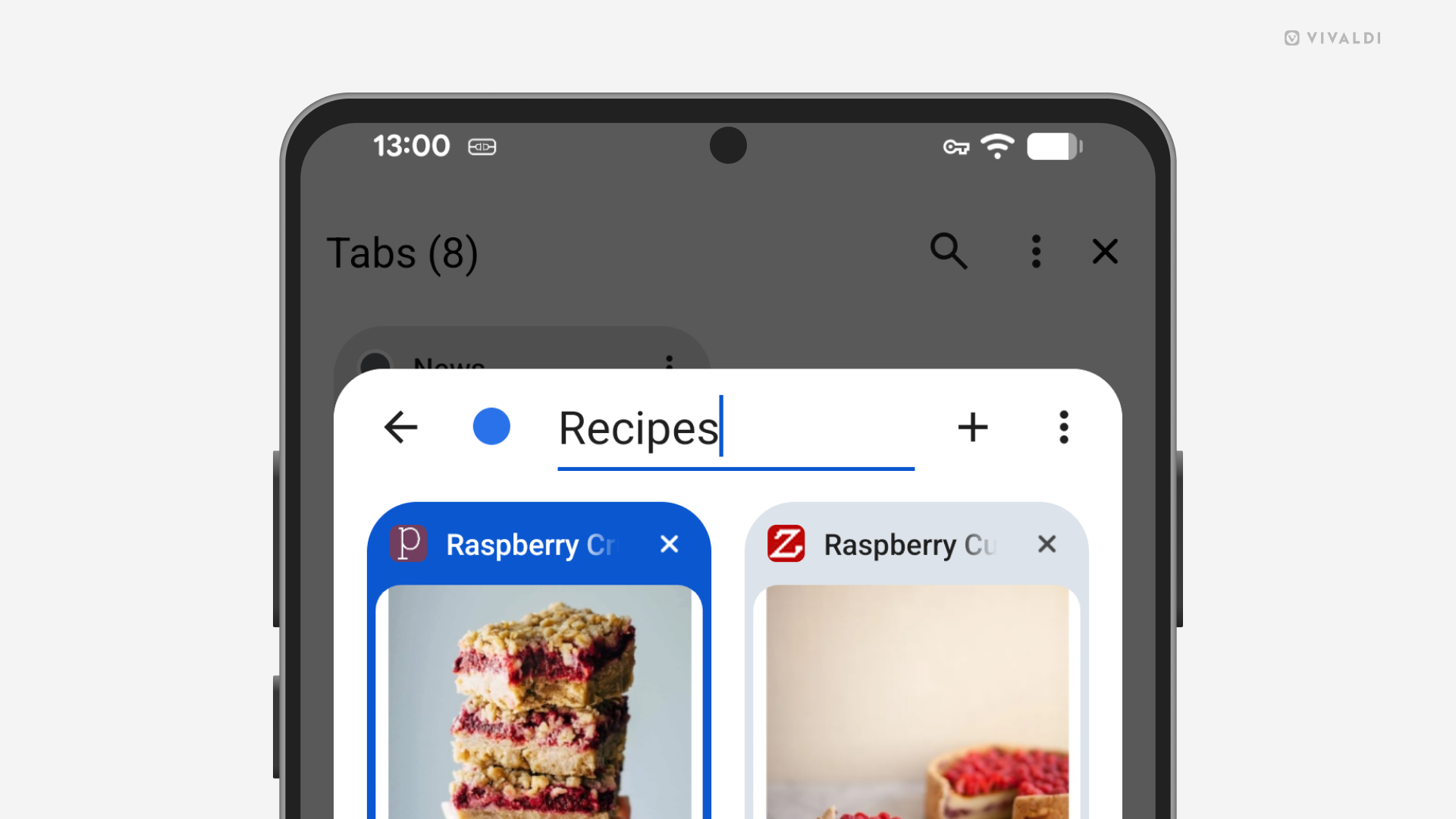
- In the Tab Stack preview, tap on the current title “# tabs”.
- Type a new title.
- Tap Done on the keyboard.
Option 2
When you have Two-Level Tab Stacks enabled, you can:
- Long press on the Tab Stack and select Edit Tab Stack.
- In the Tab Stack preview, tap on the current title “# tabs”.
- Type a new title.
- Tap Done on the keyboard.
Option 3
When you have Accordion Tab Stacks enabled, you can:
- Long-press on the stack’s name in front of the grouped tabs.
- In the menu, tap on the current title “# tabs”.
- Type a new title.
- Tap outside the menu area to save changes and close the menu.
Option 4
When you have the Tab Bar hidden and use the Tab Stacks toolbar:
- Tap on the upward chevron button.
- In the Tab Stack preview, tap on the current title “# tabs”.
- Type a new title.
- Tap Done on the keyboard.
To remove the name, open the Tab Stack preview again and remove the title.
Add color to Tab Stacks
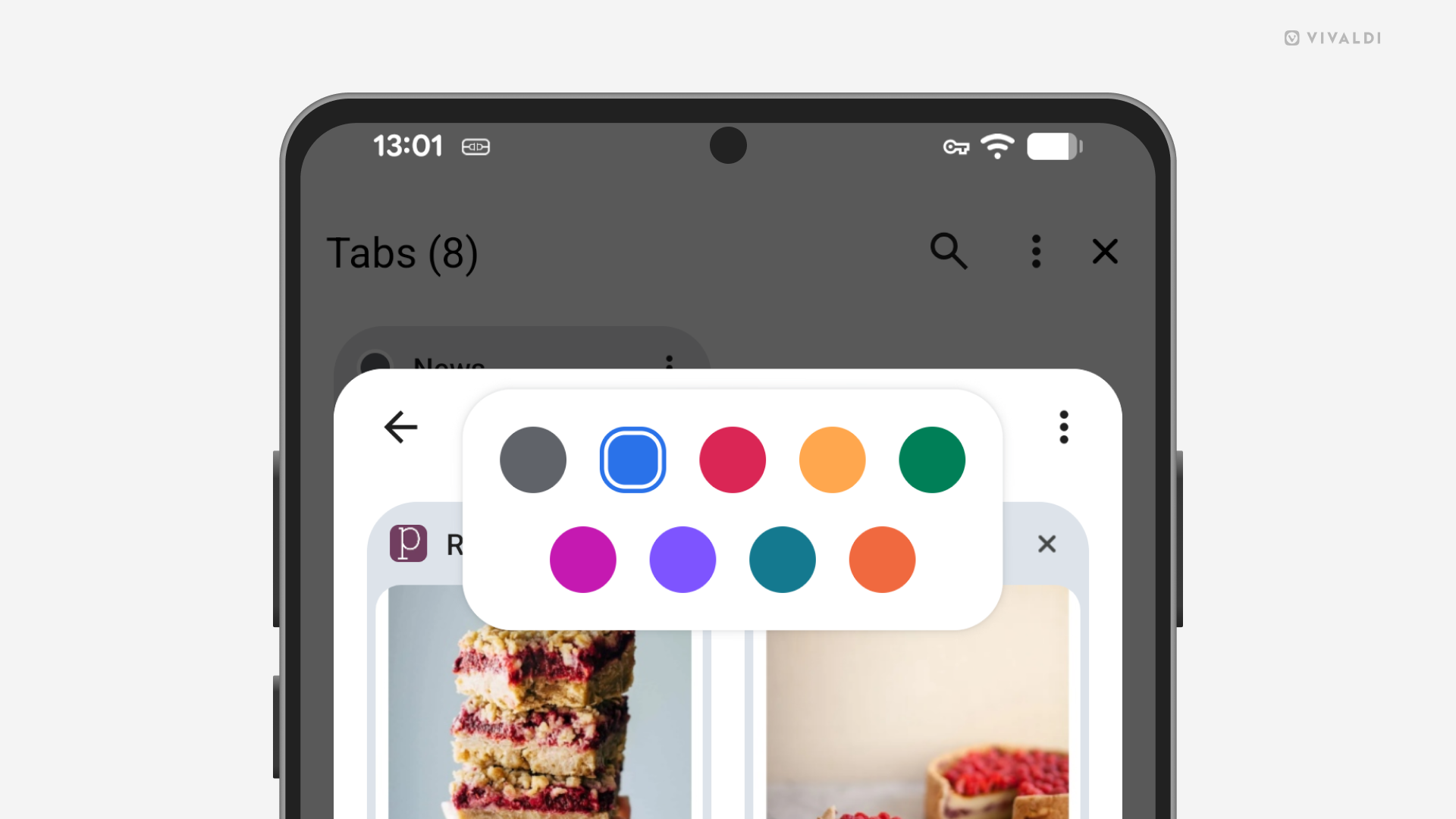
In addition to renaming Tab Stacks, you can give each stack its own color and make it stand out that way. A little circle with your chosen color will be displayed in front of the stack’s name in the Tab Switcher and as a background to the stack’s name with the Accordion Tabs view.
To select a color:
Option 1
- In the Tab Switcher, open the stack you want to add a color to.
- Tap on the current color.
- Tap on one of the 9 color options.
Option 2
- On the Tab Bar with Two-Level Tab Stacks view, long press on the stack and select Edit Tab Stack.
- In the Tab Stack preview, tap on the current color.
- Tap on one of the 9 color options.
Option 3
- On the Tab Bar with Accordion Tabs view, long-press on the stack’s name in front of the grouped tabs.
- Tap on one of the 9 color options.
Reorder tabs in a stack
To change the order of tabs in a stack:
Option 1
In the Tab Switcher
- Tap on the stack to view the tabs in it.
- Long-press on a tab.
- Drag and drop the tab to a desired location in the stack.
Option 2
On the Tab Bar:
- Long-press on a tab in the stack.
- Drag and drop the tab to a desired location in the stack.
Option 3
When you have the Tab Bar hidden and use the Tab Stacks toolbar:
- Tap on the upward chevron button.
- Long-press on a tab.
- Drag and drop the tab to a desired location in the stack.
Remove tabs from a stack
Option 1
To remove a tab from a stack in the Tab Switcher:
- Tap on the stack to view the tabs in it.
- Long-press on the tab you want to remove.
- Drag it over Remove from group that appears at the bottom of the Tab Stack window.
Option 2
To remove a tab from a stack on the Tab Bar:
- Long-press on the tab you want to remove.
- Select Remove tab from stack.
Option 3
To remove a tab from a stack with the Accordion Tabs view:
- Long-press on a tab in the stack.
- Drag the tab outside of the stack.
Option 4
When you have the Tab Bar hidden and use the Tab Stacks toolbar:
- Tap on the upward chevron button.
- Long-press on a tab.
- Drag it over Remove from group that appears at the bottom of the Tab Stack window.
To remove multiple tabs at once:
- Open the Tab Switcher.
- Tap on the stack to view the tabs in it.
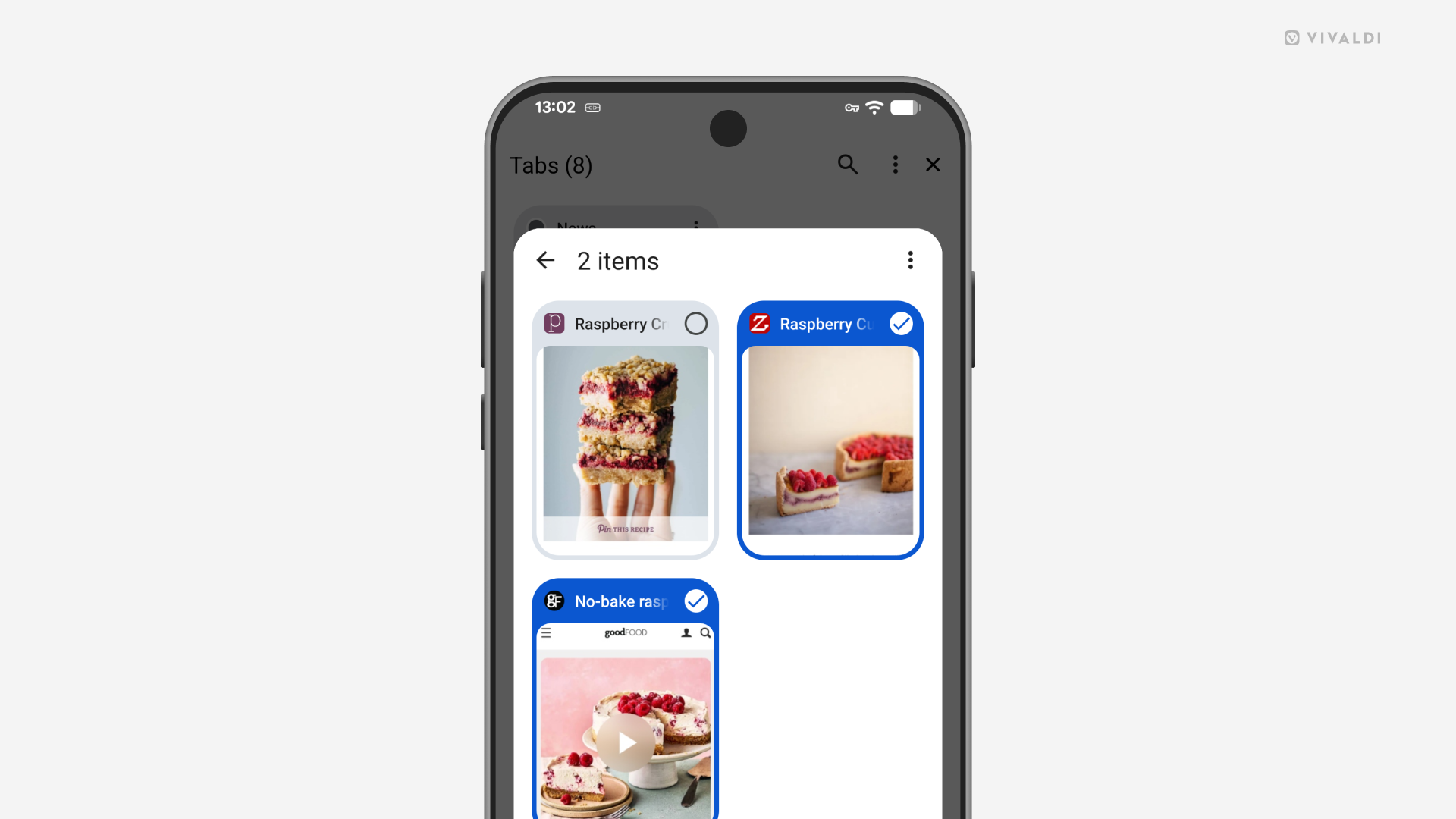
- Tap on the
 menu button in the top right corner and tap on the tabs you want to remove from the stack.
 - Tap on Remove in the top right corner.
Close and Reopen Tab Stacks
To remove the stack and its tabs from the Tab Bar, but keep them around for later:
Option 1
- Open the Tab Switcher.
- Tap on the stack you want to close.
- Tap on the menu button in the top right corner and select Close.
Option 2
- On the Tab Bar with Accordion Tabs view, long-press on the stack’s name in front of the grouped tabs.
- Select Close stack.
To reopen a stack:
- Open the Tab Switcher.
- Go to the Stacked Tabs view.
- Tap on the stack you want to reopen.
Delete Tab Stacks
To permanently delete a stack:
Option 1
Simply close all tabs in the stack.
Option 2
- Open the Tab Switcher.
- Tap on the stack you want to close.
- Tap on the menu button in the top right corner and select Delete.
Option 3
- On the Tab Bar with Accordion Tabs view, long-press on the stack’s name in front of the grouped tabs.
- Select Delete stack.
Option 4
When you have the Tab Bar hidden and use the Tab Stacks toolbar:
- Tap on the upward chevron button.
- Tap on the menu button in the top right corner of the stack preview window.
- Select Delete stack.
Option 5
In case you want to delete a stack you’ve already closed:
- Open the Tab Switcher.
- Go to the Stacked Tabs view.
- Tap on the stack’s menu button and select Delete.
Disable Tab Stacks
If you don’t want to use Tab Stacks and want to prevent accidental stacking, you can disable the feature.
To disable Tab Stacks:
- Go to Vivaldi menu > Settings > Tabs > Tab Stacking.
- Select Disabled.